Cuerva strengthens the Escúzar distribution network to guarantee electricity supply for new demand
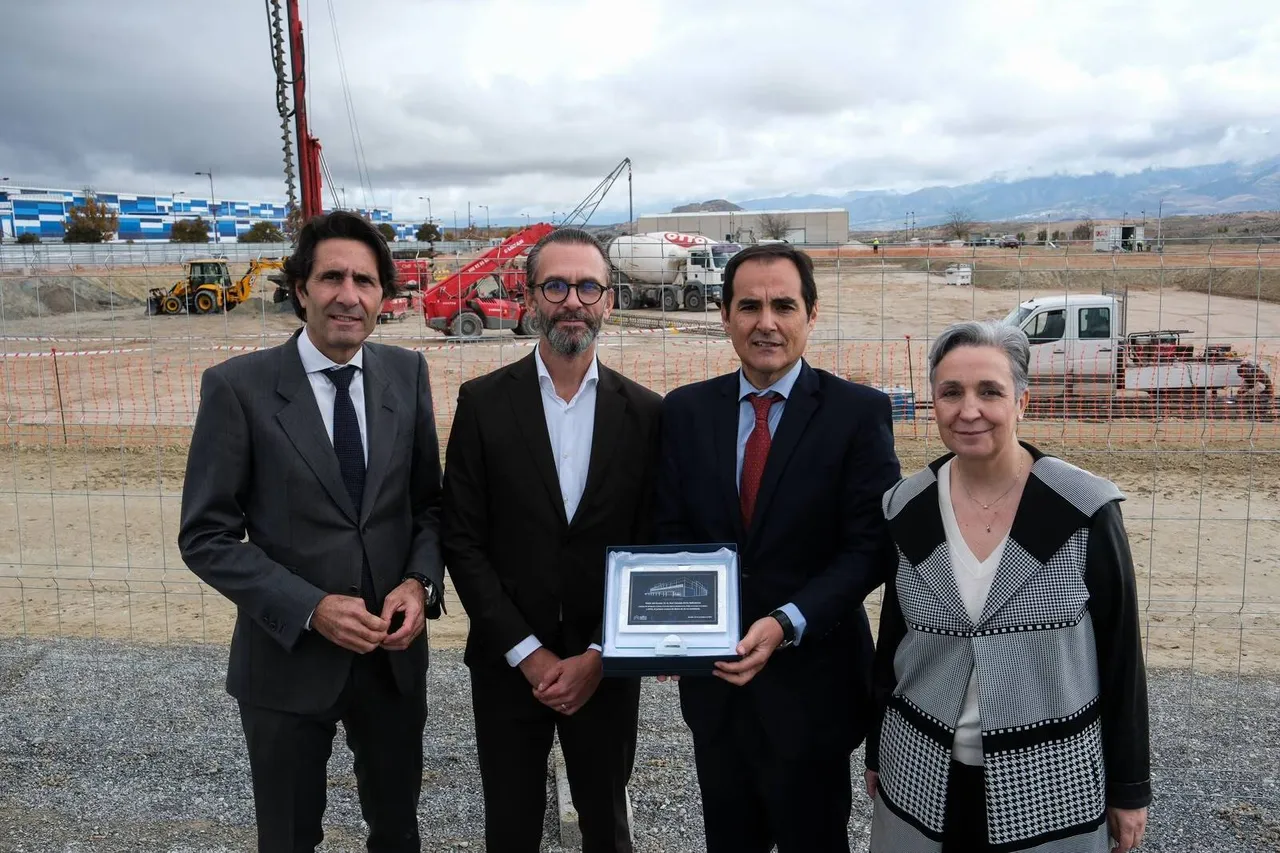

The visit of the Regional Minister for Artificial Intelligence, Digital Development and Public Administration of the Junta de Andalucía, José Antonio Nieto Ballesteros, offered a first-hand look at the progress of the SP01 project and the electrical infrastructure needs linked to the growth of CITAI and the development of the digital economy in Granada.
The project is being delivered in phases, so the distribution grid adds capacity progressively, in step with CITAI’s demand.
Granada. 19/11/2026. Cuerva is advancing the electrical infrastructure needed to support the growth of SP01, the future data center specializing in artificial intelligence and high-performance computing that Alto Infrastructure is developing at CITAI, in Escúzar, Granada.
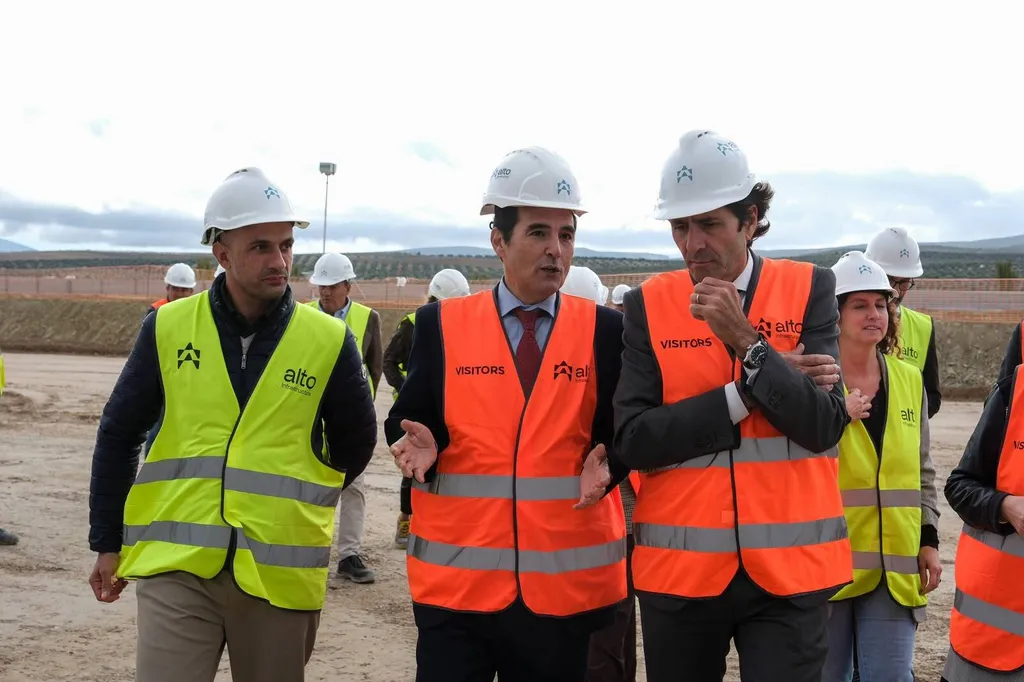
The Regional Minister for Artificial Intelligence, Digital Development and Public Administration of the Junta de Andalucía, José Antonio Nieto Ballesteros, visited the site today to see first-hand how the project is progressing and the actions planned to meet a new scale of demand driven by the technological, scientific and industrial growth of the area.
During the meeting, Nieto highlighted SP01’s energy efficiency and framed the project within the regional government’s commitment to strengthening Andalusia’s digital sovereignty. He also noted that facilities of this kind can help address the demographic challenge by bringing technology-sector activity to municipalities such as Escúzar.


SP01 will be developed progressively and is designed to reach, once completed, an electrical capacity of up to 100 MW. The main new development since the announcement made last July is the progress of the work to enable a 40 MW connection through the existing Escúzar 132/66/20 kV substation, which will support the early phases of the data center’s development. The works are progressing through the process of obtaining the necessary permits to begin work on site, and the materials planned for the works have already been purchased.
The first operational phase of the data center is expected in the second quarter of 2027, and additional capacity will be added as the campus develops. The full project involves a potential investment of more than €3 billion, covering both the construction of the facilities and the investment in IT equipment by the customers that will serve their digital services from Escúzar.
Electrical infraestructure for a new scale of demand
Cuerva is responsible for guaranteeing electricity supply to all consumers in its area of operation, and it is working to reinforce its distribution network to meet the new demand from SP01 and other strategic CITAI projects. The main actions include expanding the existing Escúzar 132/66/20 kV substation, developing new high-voltage electrical connections between Escúzar and Saleres, and building a new 220/132 kV substation in Saleres, connected to the transmission grid.
Together, these works will add new electrical capacity and strengthen continuity of supply in Escúzar by providing an additional power feed, preparing the infrastructure to meet expected demand and to support the growth of projects linked to artificial intelligence, advanced computing, research, and industry.
The new infrastructure will also be relevant to other strategic developments established at CITAI, including IFMIF-DONES, reinforcing the role of the electricity grid as an enabler of Escúzar’s economic and technological growth. Overall, developing the electrical infrastructure needed to make CITAI’s strategic projects viable involves an investment of close to €70 million, an undertaking that will strengthen the area’s capacity and support the arrival of new large-scale energy demand.
“We are moving from serving an area that historically had much smaller electricity needs to preparing infrastructure for large-scale technological, scientific and industrial projects. One of our challenges is to anticipate this new demand and put our experience in electricity grids and infrastructure at the service of projects that are transforming Andalusia. Projects like these show just how strategic energy has become for this type of investment to be established and to grow in the region,” says Ignacio Cuerva, CEO of Cuerva.
He also pointed to the important challenge of completing the grid works in time for the data center to come into operation.
Digital infraestructure designed to grow sustainably
SP01 will mobilize a potential investment of more than €3 billion and is being built to specific efficiency and sustainability criteria. The campus will use a closed-loop cooling system that continuously reuses water and prevents its evaporation during the cooling process. Even at full capacity, estimated consumption will be approximately 1,030 m³ of water per year, a very significant reduction in the use of this resource compared with conventional systems.
The development of new electrical infrastructure will also ensure that the campus grows hand in hand with new capacity, without compromising the existing power supply in the surrounding area.
At full operation, Alto Infrastructure estimates that SP01 will require between 80 and 100 direct full-time equivalent jobs, highly skilled and tied to the permanent operation of the campus. These are stable positions for the useful life of the infrastructure, estimated at between 15 and 25 years, and will be complemented by an indirect local impact that could be two to three times the direct employment.
“We thank the Regional Minister for his visit to SP01. Andalusia has an opportunity today to lead the digital transformation of southern Europe, and for that it needs infrastructure that is up to the task. Data centers are the critical element of the new digital paradigm; they are the new factories of the digital economy. Having them in our own territory means the value, the jobs and the talent stay here. With SP01 we want Andalusia not only to consume digital services, but to produce them,” says Gísli Kr., CEO of Alto Infrastructure.
The combination of digital and energy infrastructure will thus help advance one of the main technology projects planned for Granada, while strengthening CITAI’s ability to attract new energy- and technology-intensive investment.
For Cuerva, SP01 is also an example of how the role of energy companies is evolving in response to the new demands on the system: anticipating capacity, developing infrastructure, and contributing technical knowledge to make possible projects that are increasingly complex and demanding from an energy standpoint. The experience accumulated over decades in electricity grids and infrastructure allows the company to approach this new scenario with an integrated vision of the system and the territory.